
“What You Need to Know About Rabies”
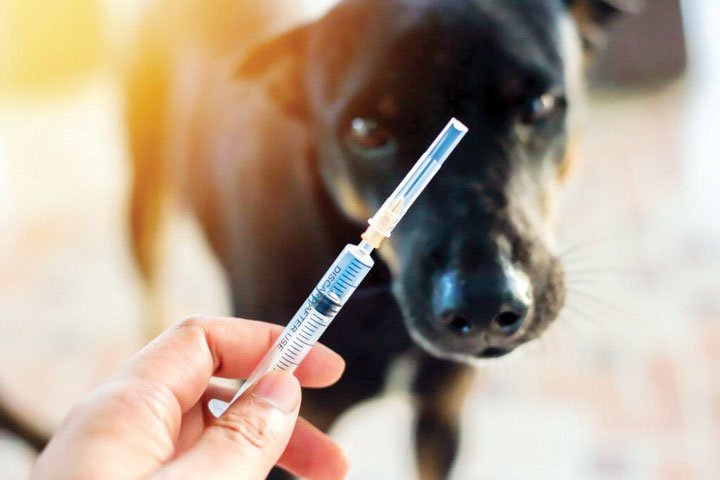
The word, ‘Rabies’, is commonly associated with fearful and alarming thoughts when heard by pet owners and veterinarians. It is known to be one of the most fatal viral diseases, acknowledged in humans and our furry companions. In this month’s article, we will be covering all the basic knowledge about the rabies virus that a well-informed pet owner should know. We aspire this article to help spread information on this virus so that we can all assure that our pets are rabies-free.
\nThe most common method for the rabies virus to be spread amongst canines is through a bite. When one infected animal bites another, the virus is then transmitted into the victim through the saliva. The virus then makes its way to the victim’s peripheral nerves. These nerves can be found located outside of the spinal cord and brain. Here, the virus begins to replicate itself and then settles down in the victim’s salivary glands. Thus, ready to attack another victim through the saliva found in a bite. There are other animals that can carry this virus in their saliva and potentially can place your pet at risk through their bite as well. Such animals are bats, racoons, coyotes, foxes and skunks. Once your dog is bitten by an infected animal, clinical signs can appear anywhere from within ten days to four months. Each case is different on how long it takes for symptoms to show, due to the dependency of the location of the bite, amount of saliva in contact during the bite and how badly your animal is bitten.
\nWhen it comes to seeing symptoms of Rabies virus in your infected pet, there are two forms of the disease that one can refer to: Dumb Rabies and Furious Rabies. Dumb Rabies is the most common category of this virus, seen in canines. The presenting clinical signs would include difficulty in swallowing, progressive paralysis in all four limbs, lethargy, incoordination, depressed, throat and jaw muscles being paralyzed causing excessive salivation, comatose and even death. The Furious form of Rabies consists of the dog becoming very aggressive, paralysis in which he cannot drink or eat, decreased appetite, eating strange objects (dirt, rocks, garbage, etc.) and death from seizures. Before either form can take place, all bitten dogs go through an initial stage, known as ‘the prodromal phase’. This phase causes the dog’s behavior to completely change. If your dog is naturally quiet, then he will display aggression and hyperexcitability. Whereas, if your pet is normally active and hyper, he will show nervousness and hesitation. The prodromal phase can last up to three days before it shows signs of either the Dumb or Furious forms.
\nAs we have seen now that a bite from a rabid animal to your pet can be very fatal, it can also be very dangerous to you as well. Rabies virus is considered to be zoonotic, which means that humans can become infected from their pets and animals who are exposed. This virus is just as deadly in symptoms for humans as it is in dogs. The only measure that can possibly assist towards preventing the progressive symptoms known to occur, is by administering an anti-rabies serum into the victim. This serum, in the form of the rabies vaccine, aids in allowing the victim’s body to creating a counteracting army of antibodies that assist in decreasing the progression of this virus and increasing the chance of survival rate in the victim. The best, ideal way of preventing this virus in your pet is to ask your veterinarian about administering the rabies vaccination. In North America, the rabies vaccine is considered a mandatory protocol. This vaccination can be given earliest to your dog and cat between the ages of 12 – 16 weeks old. The revaccination protocols, as advised by your veterinarian, can be every year or every three years. The rabies vaccine will help your body produce antibodies, which in turn will help prevent the virus from entering your pet’s nervous system. When your dog or cat is vaccinated for the rabies virus, you will receive a health vaccination certification verifying that your pet is covered legally. You will also receive a dog tag stating the serial number of the vaccine given that you can place on the collar. We highly advise to place this tag on your pet’s collar so that in the chance of your pet being lost, the person who finds him will know your pet is safe to be around. Rabies serial tag numbers can also aid in your pet finding its way back to its veterinarian, since they will be registered with that Rabies ID number.
\nThe rabies virus is seen throughout the world in most continents. However, there are parts of the world who have successfully put a protocol in place to become a rabies-free area. Such countries are Ireland, Australia, Japan, United Kingdom, Iceland, New Zealand, Antarctica and certain regions of Scandinavia and the Pacific Islands. North America, however, still unfortunately sees occasional cases of this virus. Prevalently in British Columbia, many species of bats are known to be predominant carriers of the rabies virus to this day. The most recent discovery of the rabies virus in BC was last year in May 2019, when an adult male came into contact with a rabies infested bat. Six weeks later he developed symptoms and tested positive for the virus. Recently, the York region of Ontario revealed a positive adult male for the virus after coming into contact with a rabid bat.
\nThere is no treatment protocol for dogs or cats that test as rabies positive. In such cases, euthanasia is legally advised, and samples of the brain are sent for laboratory testing. If rabies is suspected, but not entirely confirmed, then the dog or cat is required to be kept in isolation and legally is not allowed to come into contact with any humans or other animals during this quarantine period. A dog who is at risk of shedding the rabies virus in his saliva will also show clinical signs within days. Therefore, 10 days of isolation is mandatory in order to observe the development of any symptoms. Once the 10 days of quarantining has passed, and the dog displays no signs of rabies, then he is considered no longer contagious or a harm to public health. However, in either case, your veterinarian, under law, is required to inform his or her local and provincial state authorities for animal disease and spread. It is then under the guidance of these authorities that which protocol is needed to be placed, in order to support and protect public health measures.
\n \n\n \n
\nDr. Sifti Bhullar
\n\n
Reader Conversations (0)
No reader comments yet. Be the first to share your thoughts on this story.
Join the Discussion