
Long COVID: Persistent symptoms following COVID-19 acute illness
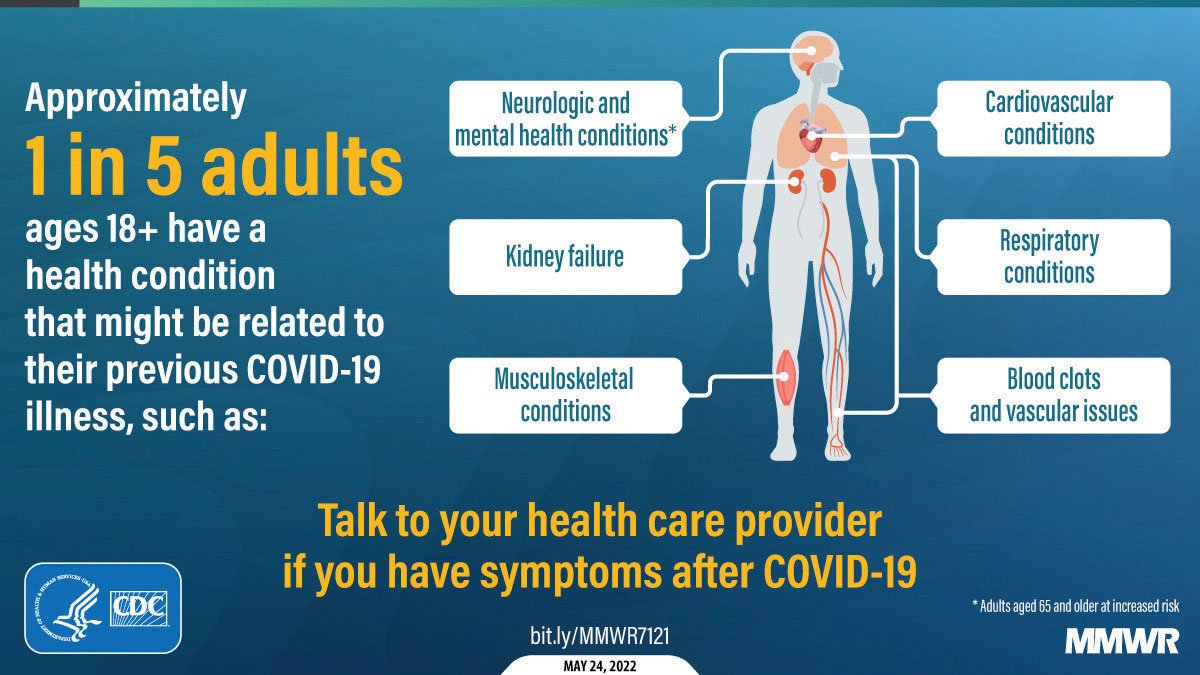
Persistent symptoms following COVID -19\n\nThe corona virus disease (COVID-19) pandemic has resulted in a growing population of individuals recovering from severe acute respiratory syndrome coronavirus 2 (SARS-CoV-2) infections. These patients may develop a variety of symptoms after recovery from acute infection, referred to by several terms including “long COVID” and “post-COVID conditions’’.\n\nThe recovery process from COVID -19 exists on the continuum: complications, while after recovery from the acute phase, some patients require evaluation and management for persistent or new symptoms.\n\nStages of COVID-19 recovery: \n\nAcute COVID-19:\n\nSymptoms of COVID-19, occur up to four weeks following the onset of illness.\n\nPost-COVID condition: Broad range of symptoms (physical and mental) and symptom clusters that develop during or after COVID-19 continue for more than three months from the onset of illness, have an impact on the patient’s life and other conditions have been ruled out.\n\nThese stages reflect symptomatic recovery and are not related to active viral infection. Other terms used to describe prolonged symptoms following COVID-19 illness are described as “long COVID”, “post acute COVID-19, “chronic COVID-19 and”post COVID syndrome”.\n\nThere are no widely accepted clinical diagnostic criteria for “long COVID”\n\nPrevention of Post –COVID symptoms:\n\n The most effective means to prevent post COVID conditions also is to prevent COVID-19 (e.g: vaccination, social distancing, masking, hand hygiene): it is likely that any measure that decreases the incidence or severity of acute COVID—19 infection will in turn decrease the incidence and severity of post COVID conditions.\n\nThe true prevalence of longCOVID is not known due to varying definitions and methods of analysis: A person who had symptomatic COVID-19 infection experienced at least one of three long COVID symptom clusters, persistent fatigue with body pain or mood swings, cognitive problems or respiratory problems).Females above 20 years are likely to have post COVID symptoms than males above 20 years. Both males and females under 20 years of age are equally affected.\n\nPersistent Symptoms- Persistent physical symptoms following acute COVID -19 are common and typically include fatigue dyspnoea, chest pain and cough. Patients recovering from COVID-19 may also have additional psychological (e.g: anxiety, depression, posttraumatic stress disorder) and cognitive (e.g. poor memory and concentration symptoms : Less common persistent physical symptoms include loss of smell, joint pain , headache, sicca syndrome, rhinitis, bad taste, poor appetite, myalgias, insomnia, hoarseness, hair loss, sweating, reduced libido and diarrhoea.\n\nPsychological and cognitive symptoms: these are acute COVID-19 anxiety/depression, physical weakness, joint stiffness/pain, mental/cognitive dysfunction, and muscle pain.\n\nThe risk of cardiovascular events (e.g: myocardial infarction, stroke, arrhythmias, pericarditis, myocarditis and thromboembolic disease) may be increased after COVID-19 infection.\n\nExpected recovery time courseThere is a shorter recovery (about two weeks) for those with mild disease and a longer recovery (about two to three months or longer) for those with more severe disease. Symptom recovery may take 4 months in non-hospitalized patients and 9 months in hospitalized patients.\n\nRisk of rehospitalization- Most patients with COVID-19 are successfully discharged although approximately 10 to 20 percent require rehospitalization within 30 and 60 days. Patients recovering from COVID-19 infection range from those with mild illness not requiring medical attention to those with severe illness requiring prolonged critical care support.\n\nAssess disease severity, complications and treatment- During the initial follow up evaluation of a patient with persistent symptoms, a comprehensive history of the patient’s acute COVID-19 illness, including the illness timeline, duration and severity of symptoms, type and severity of complications (e.g: venous thromboembolism, presence and degree of kidney injury, supplemental oxygen requirements, cardiac complications, delirium) is taken. CoVID-19 testing results and initial treatments used are also considered. The Patients with more severe symptoms may need hospitalization and a multidisciplinary approach to manage.\n\nAdvanced Genomics Inc \n\nAddress: 8425 120 St #203, Delta, BC V4C 6R2\n
\n\n \n
\n
\nDr Sudarshan Bhagat
\n\n
Reader Conversations (0)
No reader comments yet. Be the first to share your thoughts on this story.
Join the Discussion